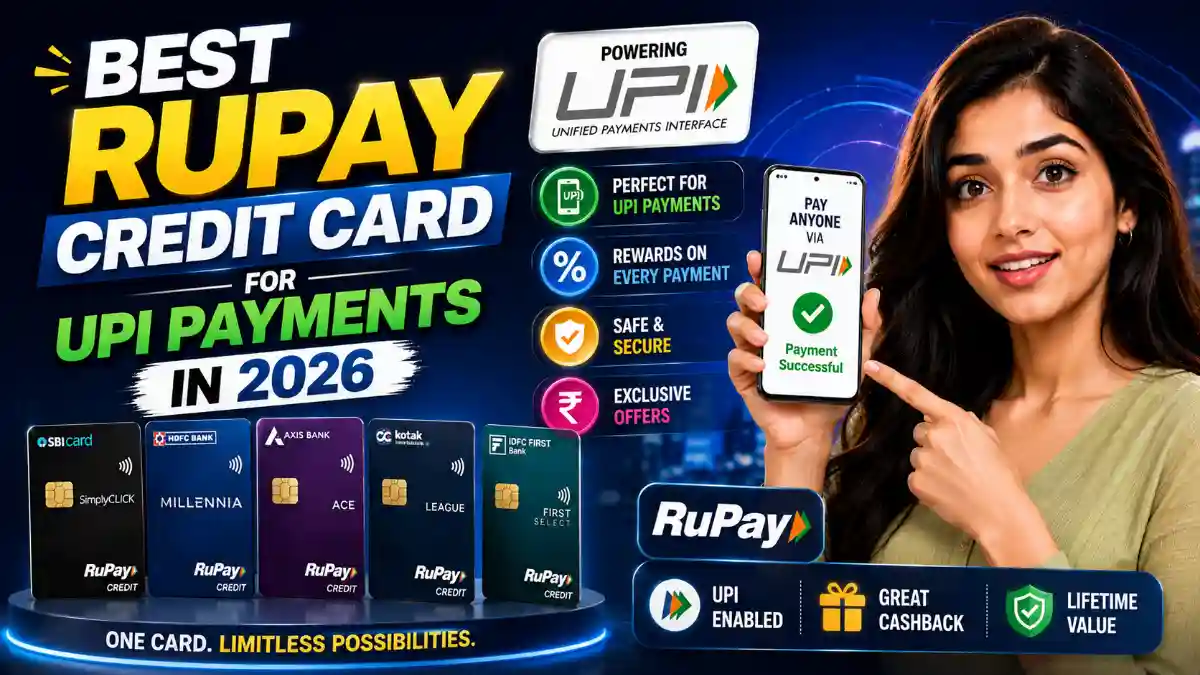
A few years ago, paying a street vendor with a credit card was impossible. You’d either hand over cash or scan a QR code with your bank account. Then RuPay credit cards got linked to UPI, and suddenly the same QR code could draw from your credit limit. It sounds like a small change. For a lot of people, it changed how they use credit cards entirely.
This guide explains how it works, what to look for in a RuPay credit card, and whether it deserves a spot in your phone.
What is a RuPay credit card on UPI?
RuPay is India’s domestic card network. Many banks now issue RuPay credit cards, and you can link them to UPI apps such as Google Pay, PhonePe, Paytm, BHIM and others. Once linked, you scan any UPI QR code, enter your UPI PIN, and the payment goes through your credit card instead of your bank account.
Two points are worth understanding. First, this works for merchant payments, meaning shops, restaurants and online merchants that accept UPI. Person-to-person transfers usually don’t work from a credit card. Second, you’re still spending on credit. The bill arrives later, and you must pay it by the due date.
Why people like it
- Acceptance. UPI QR codes are everywhere, from tea stalls to supermarkets. Plastic card machines are not.
- Rewards on small payments. Everyday spends that used to go through your bank account can now earn points or cashback.
- Interest-free period. If you pay in full, you get the same grace period as a normal card, often up to 45 to 50 days depending on the billing cycle.
- Convenience. One app, one PIN, no card swiping.
What to look for in a RuPay card
Rewards on UPI spends
This is the biggest difference between cards. Some banks give full rewards on UPI transactions, while others cap them or exclude them. Look at the reward rate for “UPI merchant payments” specifically. A card that gives 2 percent on card swipes but 0.5 percent on UPI isn’t ideal for this purpose.
Annual fee
Many RuPay cards are lifetime free or have a fee that’s waived at a modest spending level. If you’re a beginner, start there. Our guide to lifetime free cards shows how to judge the terms.
Merchant discount and category rules
Some rewards apply only to specific merchant categories. Fuel, rent, utilities and insurance often get reduced or zero rewards, regardless of payment mode.
App support
Check which UPI apps your card works with. Support differs by bank and sometimes arrives in phases.
Credit limit and eligibility
Since UPI makes spending feel effortless, a smaller limit can be a healthy guard rail. But if you want to use it as your main card, make sure the limit covers your monthly use with room to spare.
How to link your card to UPI
- Open your UPI app and go to payment methods or add a bank account.
- Choose “Credit card” and select your issuing bank.
- Enter the last six digits of your card number and the expiry date, then verify with the OTP.
- Set a UPI PIN for the card.
- Scan a merchant QR code and pick the credit card as your payment source.
Steps vary slightly between apps and banks, so follow the on-screen prompts. If your bank isn’t listed, it may not yet support UPI on credit cards.
Possible downsides
It’s easy to overspend. Scanning feels lighter than handing over a card. Track your total spending weekly. Rewards can be limited. Banks sometimes reduce benefits on UPI compared with normal card use. Not all merchants accept it. Some small merchants use QR codes linked to a personal account, which don’t accept credit cards. Refunds can be slow. Returns on UPI credit card payments may take several days to appear. Cash-like handling. Some payments to individuals or certain categories may be blocked or charged.
Tips for using it well
- Pick one UPI app as your default for credit card payments to keep track easy.
- Turn on notifications for every transaction.
- Set the card’s monthly spending limit lower than your actual limit if the app allows it.
- Pay the full statement amount automatically. Our beginner guide to credit and debit cards explains the cost of carrying a balance.
- Review the monthly statement. UPI-based transactions appear with merchant names that can be confusing at first.
Who should get one
A RuPay credit card on UPI is a great fit if you’re someone who pays mostly through QR codes, wants rewards on everyday spending, and is disciplined about repayment. It’s also helpful for beginners since the networks and apps are familiar. If you travel abroad often or want airport lounges, you may still need a Visa or Mastercard. RuPay is expanding internationally, but acceptance is still narrower.
Impact on your credit score
Transactions on a RuPay credit card are reported to credit bureaus the same way as any other card. Paying on time and keeping your utilisation under 30 percent helps your score. Missing payments hurts it just the same. Read more in our explanation of credit score ranges.
RuPay vs Visa and Mastercard: what you give up
People often ask whether choosing RuPay means a weaker card. For domestic use, not really. RuPay cards are accepted at most Indian merchants, work for online payments, and many premium variants offer lounge access and decent rewards. The gap shows up abroad. Acceptance of RuPay overseas has grown through tie-ups with other networks, but it is still thinner than Visa or Mastercard, so don’t make it your only card if you travel internationally. A common setup is to keep a RuPay card for everyday UPI spending at home and a Visa or Mastercard as your travel companion.
Another small difference is customer service. Since the card is issued by your bank rather than the network, support quality depends on the bank. Before you apply, check how easily you can block the card, raise a dispute and change limits inside the app. Those everyday features matter far more than which logo sits on the plastic.
A sample month on a UPI credit card
Imagine you spend about Rs 12,000 a month through UPI: groceries, a few restaurant bills, mobile recharge and local transport. On a bank account that earns you nothing. On a RuPay card giving 1 percent back, that’s Rs 120 a month, or about Rs 1,440 a year, for doing exactly what you already do. It isn’t life-changing, but it’s free money as long as you pay the bill in full. The moment you start paying interest, the maths flips against you, so treat the card like a debit card with a delay, not as extra income.
Frequently asked questions
Can I send money to friends using a credit card on UPI?
Generally no. Credit card UPI is meant for merchant payments.
Is there any extra charge for UPI transactions on a credit card?
This depends on the bank and the merchant. Check your card’s fee schedule and your statement for any added charges.
Do I get the interest-free period?
Yes, if you pay the full statement amount by the due date.
Can I link more than one RuPay card?
Most apps allow multiple cards, but keep it manageable so you can monitor everything.
Is it safe?
UPI transactions need your PIN, and banks offer alerts and limits. Never share your PIN or OTP, and be careful with unknown QR codes asking you to “receive” money.
This article is for general information and isn’t financial advice. Features and fees change, so check with your bank for current details.