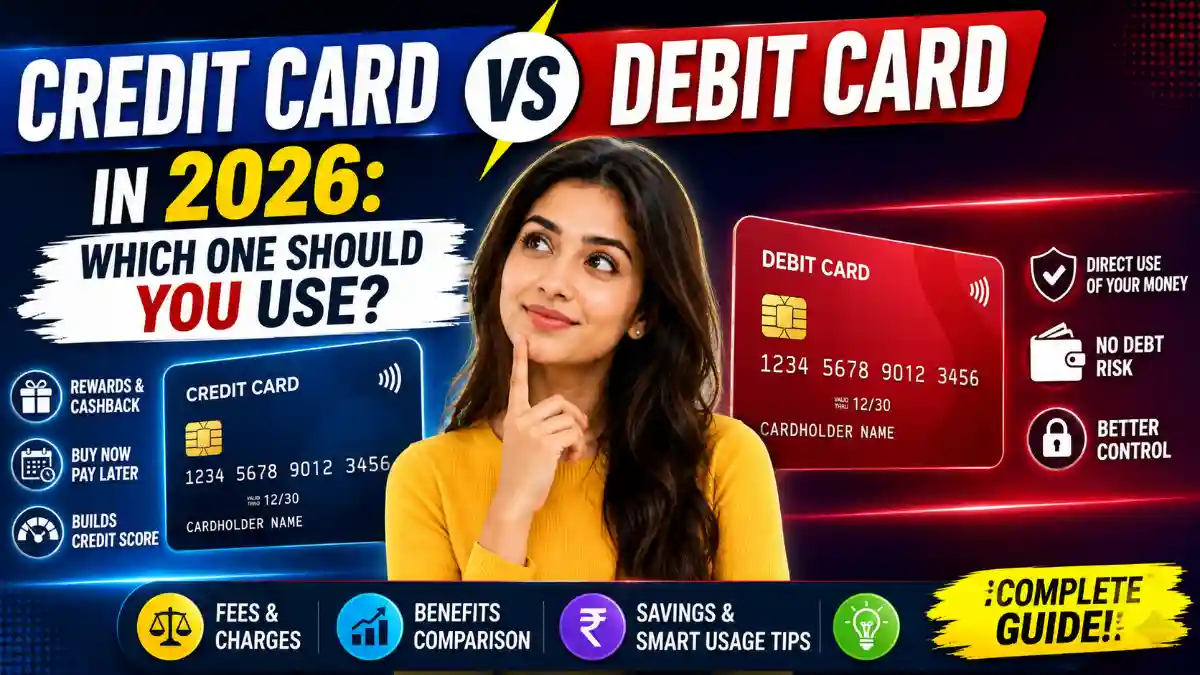
Open most wallets and you’ll find both a credit card and a debit card sitting side by side. They look nearly identical. They work at the same machines. Yet they behave very differently, and using the wrong one at the wrong time can cost you money or put your savings at risk.
Here’s a straightforward comparison, without the banking jargon, so you can decide which one to reach for in different situations.
The basic difference
A debit card takes money directly from your bank account. If you have Rs 10,000 and spend Rs 2,000, you’re left with Rs 8,000 immediately. You’re spending your own money.
A credit card lets you borrow from the bank up to a limit. You spend now and pay later, usually by a due date a few weeks away. If you pay the full bill on time, you pay no interest. If you don’t, interest kicks in at a high rate.
Everything else, from rewards to safety to credit score impact, flows from that one difference.
Safety and fraud protection
This is where credit cards have an edge. If someone steals your card details and makes a fraudulent purchase on a credit card, it’s the bank’s money that’s tied up while the dispute is investigated. Your own savings stay untouched.
With a debit card, the money leaves your account immediately. Under RBI rules, customers who report unauthorised transactions quickly have limited or zero liability, but getting the money back can take days or weeks, and in the meantime you might not have funds for rent or groceries. For online shopping and unfamiliar websites, a credit card puts a buffer between you and the fraudster.
Rewards and perks
Credit cards generally offer richer rewards: cashback, points, airport lounge visits, fuel surcharge waivers, and discounts on partner brands. Debit cards sometimes offer small cashback or offers, but nothing like the range available on credit cards.
The catch is that rewards only make sense if you pay the bill in full. A 2 percent reward is wiped out by a single month of interest at 3 percent.
Cost
- Debit cards: usually free or a small annual fee. No interest because there’s no borrowing. Overdraft charges may apply if the account allows it.
- Credit cards: may have annual fees, late payment charges and interest of 36 to 48 percent a year on unpaid balances. Cash withdrawals carry extra fees.
If you tend to overspend, a debit card is the cheaper habit. If you’re organised, a credit card can pay you back.
Credit score impact
Debit card use doesn’t affect your credit score at all, because you’re not borrowing. Credit card use is reported to credit bureaus. Paying on time and keeping balances low builds a strong profile, which helps when you apply for a home loan, car loan or personal loan later. Missing payments does damage. If you want to understand how scores work, read our guide on what is a good credit score.
Spending control
This one goes to debit cards for many people. You physically can’t spend more than you have. A credit card gives you a limit that might be far above your monthly income, and the pain of paying arrives weeks later. Research on spending behaviour consistently shows people spend more when payment is delayed.
That said, tools like spending alerts, transaction limits and budgeting apps can make credit cards just as manageable.
Acceptance and convenience
Both are widely accepted at shops and online. Credit cards are often preferred for hotel bookings and car rentals, which place a hold on your funds. A hold on a debit card ties up your actual cash. Meanwhile, debit cards are essential for ATM withdrawals, and cash withdrawals on a credit card are expensive.
Side by side
- Source of money: debit uses your balance, credit uses the bank’s.
- Interest: none on debit, high on unpaid credit balances.
- Fraud exposure: lower with credit.
- Rewards: better with credit.
- Credit building: credit only.
- Overspending risk: higher with credit.
- ATM use: debit.
When to use a credit card
- Online shopping, especially on sites you don’t fully know
- Bookings for travel and hotels
- Regular bills where you can earn cashback
- Big purchases where purchase protection or EMI conversion could help
- Anytime you want to build credit history
When to use a debit card
- Withdrawing cash from an ATM
- Small everyday purchases if you’re prone to overspending
- Situations where the merchant adds a surcharge for credit cards
- When you’re still learning to budget
A simple rule that works
Use a credit card as if it were a debit card. Spend only what you could pay from your bank balance today, and let the credit card act as a short-term, interest-free layer with rewards and protection on top. If you can’t follow that rule yet, stick with debit until you can.
Two quick stories
Priya, a software engineer in Bengaluru, puts nearly all her spending on one credit card, from groceries to her phone bill. She pays the full amount through auto-debit on the 5th of every month. Over a year she collects around Rs 6,000 in cashback and has never paid a rupee in interest. For her, the card is simply a free, reward-paying layer on top of her bank account.
Arjun, on the other hand, took a card at 22 and treated the limit like extra income. He paid the minimum due for eight months, and by the time he noticed, the balance had grown by a third through interest and fees. He now uses a debit card for everyday spending and is clearing the old balance step by step. Neither of them is smarter than the other. They just had different habits, and the same product served one and hurt the other.
The lesson is simple. The card that is right for you is the one that matches how you actually behave with money, not how you hope you will behave next month. If you’re not sure, try a debit card for a few months, track your spending honestly, and then move to a credit card when you’re ready. There’s no prize for rushing.
Things to check on any card you hold
- Is international and online usage switched on only when you need it?
- Have you set transaction alerts by SMS or app notification?
- Do you know your billing date, due date and credit limit?
- Is auto-pay set to the full amount?
Frequently asked questions
Which is better for a beginner?
Start with a debit card to learn budgeting. Add a credit card once you have a steady income and a habit of tracking spending. Our guide to first credit cards can help.
Can I use both together?
Yes, and most people do. Use the credit card for most purchases and the debit card for cash.
Does using a credit card for everyday spending hurt my score?
No, as long as you pay on time and keep your balance below roughly 30 percent of your limit.
Is it safer to shop online with a debit or credit card?
A credit card is generally safer because your savings aren’t directly exposed during a dispute.
Do debit cards have any benefits?
Yes: no interest, simple spending limits, and easy cash access. Some also offer small rewards.
This article is for general information and isn’t financial advice. Terms vary by bank, so check yours.